
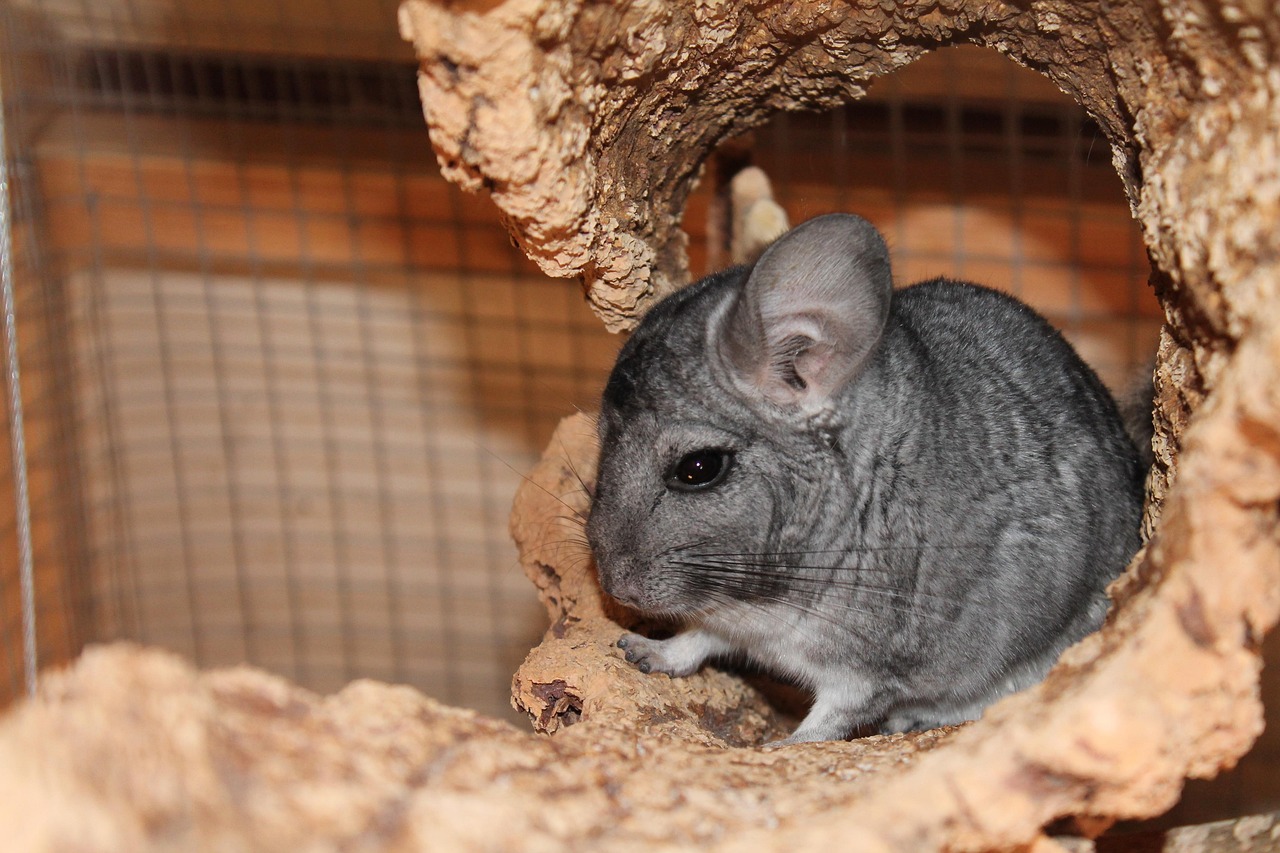
Chinchillas come from the cool, high-altitude Andes. Their exceptionally dense fur helps keep them warm there, but they cannot sweat to cool off when a room heats up. A room that feels fine to you may be too warm for them.
Keeping your chinchilla’s room reliably cool and dry is one of the most important things you can do for their comfort and health. Check the temperature and humidity near their cage because overheating can lead to fatal heatstroke.
Keep the room cool and dry
For everyday care, aim for about 60–68°F (16–20°C) and relative humidity below 50%. Make sure the room has fresh air, but don't let drafts blow onto the cage. A cage beside a sunny window or heater can get warmer than the rest of the room.
Everyday room targets
Temperature
Relative humidity
If your chinchilla’s coat looks clumped or oily, take another look at the room’s temperature and humidity as well as their dust-bath routine.
If the room warms, act on it
When the reading near the cage climbs above the everyday target of about 68°F (20°C), that’s your cue to adjust the AC and see whether the room cools. If it keeps warming, or the AC fails, move your chinchilla to a cooler space.
Humid air adds to the risk as the room warms. If humidity rises above 50%, run the AC or a dehumidifier and check the readings again. If the room won’t stay cool and dry, use another room.
Measure where the cage is
Your chinchilla spends much of the day in their cage, so that’s where temperature and humidity matter most. Even within the same room, temperatures can differ just a few feet apart.
Place a temperature and humidity monitor near their cage, but out of chewing reach. Keep it away from direct sun and AC vents so its readings aren't skewed by one unusually warm or cold spot.
A single reading is only a snapshot. Check the temperature and humidity throughout the day, especially when that room tends to get warm. Check again after changing a thermostat schedule, closing a door, or moving the cage. If your monitor has an app, you can check readings while you’re away and review its history for warm or humid stretches you might have missed.
Alerts are most useful when they leave you time to act. If your monitor supports them, set one for temperatures above 68°F (20°C) and another for humidity above 50%, then test that both reach your phone.
If an alert arrives while you’re away, check the current temperature and humidity in the monitor’s app; conditions may have changed since the alert was sent.
Room monitor option
Govee H5179 Wi-Fi Thermo-Hygrometer
- Why consider it
- Govee's app shows current and past temperature and humidity readings and can alert you when either leaves a range you choose.
- Consider if
- You want readings near the cage, phone alerts, and a history of how the room changes over time.
- Keep in mind
- Wi-Fi can disconnect and phone notifications can be silenced. Check that readings are still updating, and replace the batteries when low.
Set cooling for your chinchilla’s room
Some smart thermostats can use a separate wireless sensor to decide when to run central AC. Place that sensor near your chinchilla’s cage, out of chewing reach. Select it for the times you want the thermostat to use its reading. It can then influence cooling even if the thermostat is in a cooler hallway. If other sensors are selected too, the thermostat may average their readings; the cage room will not necessarily control the AC on its own.
Central AC control option
ecobee Smart Thermostat Premium with SmartSensor
- Why consider it
- The included SmartSensor measures a separate room, and ecobee lets participating sensor readings influence cooling. Its app also lets you adjust the thermostat while away.
- Consider if
- You want the temperature in your chinchilla’s room to influence when central AC runs, even if the hallway stays cooler.
- Keep in mind
- Check HVAC compatibility before buying. It cannot cool one room independently, and settings based on human occupancy may reduce cooling when your chinchilla is alone.
With ecobee, pair the included SmartSensor and select it in each scheduled Comfort Setting so it works while you're away or asleep. Check which other sensors participate in those settings. Check Smart Home & Away and, if enabled, Follow Me: both can change cooling based on where people are. A chinchilla may not register as an occupant, so disable either feature if it reduces cooling when people leave the home or cage room. Use the monitor near the cage to verify the temperature stays within the everyday target when no person is present.
When ecobee is online, you can check and adjust it from its app while you’re away. If you also use Govee, check both apps regularly. When the monitor shows the room above the everyday target, adjust cooling in ecobee and check the monitor again to see whether the temperature falls.
Plan for cooling failures
A portable AC can be plan B when central AC quits but the power stays on. Before hot weather arrives, decide whether you would use it in your chinchilla’s usual room or another room. Measure that room’s floor area in square feet (length × width) and compare it with the AC’s stated coverage. Check that the window kit fits and the exhaust hose reaches the window. The stated coverage is a starting point; run the unit in that room and confirm it can hold the everyday temperature target before you need it.
Portable backup AC option
Whynter NEX ARC-1230WN portable AC
- Why consider it
- It can provide portable backup cooling if central AC fails while power remains on. Whynter specifies 12,000 BTU SACC cooling, a dual-hose design, and an included window installation kit.
- Consider if
- The room you plan to cool is within Whynter’s stated coverage of up to 600 sq ft.
- Keep in mind
- It weighs about 77 pounds and needs power, space for its hose, and a window that fits its installation kit.
A power outage is a different problem: both central and portable AC stop unless you have a suitable backup power system.
A generator may keep the AC running during an outage if it can handle the load; plan the connection with a qualified electrician beforehand. Never run a portable generator indoors or in a garage. Keep it at least 20 feet from doors, windows, and vents, and use a working battery-powered carbon monoxide detector inside the home.
If home cooling fails, move your chinchilla to a cool place elsewhere. Choose that place in advance, arrange for someone who can take your chinchilla there while you’re away, and keep a carrier, hay, and water ready.
References
- Merck Veterinary Manual. Chinchillas.
- Merck Veterinary Manual. Routine Health Care for Chinchillas.
- VCA Animal Hospitals. Chinchillas: Housing.
- VCA Animal Hospitals. Chinchillas: Health Conditions.
- Aliso Beach Animal Clinic. Chinchilla Veterinarian & Care Guide.
- LafeberVet. Chinchillas: Client Education Handout.
- RSPCA. Creating a Good Home for Chinchillas.
- Govee manufacturer product page: H5179 Wi-Fi Thermo-Hygrometer.
- ecobee manufacturer product page: Smart Thermostat Premium.
- ecobee manufacturer product page: SmartSensor.
- ecobee manufacturer guidance: Get the Most Out of Your Thermostat.
- U.S. Environmental Protection Agency. A Guide to Siting and Installing Air Sensors.
- AVTECH. Temperature & Humidity Sensor Accuracy and Resolution.
- Whynter manufacturer product page: NEX ARC-1230WN portable AC.
- Centers for Disease Control and Prevention. What to Do to Protect Yourself During a Power Outage.
- U.S. Environmental Protection Agency. What Are the Main Ways to Control Moisture in Your Home?