
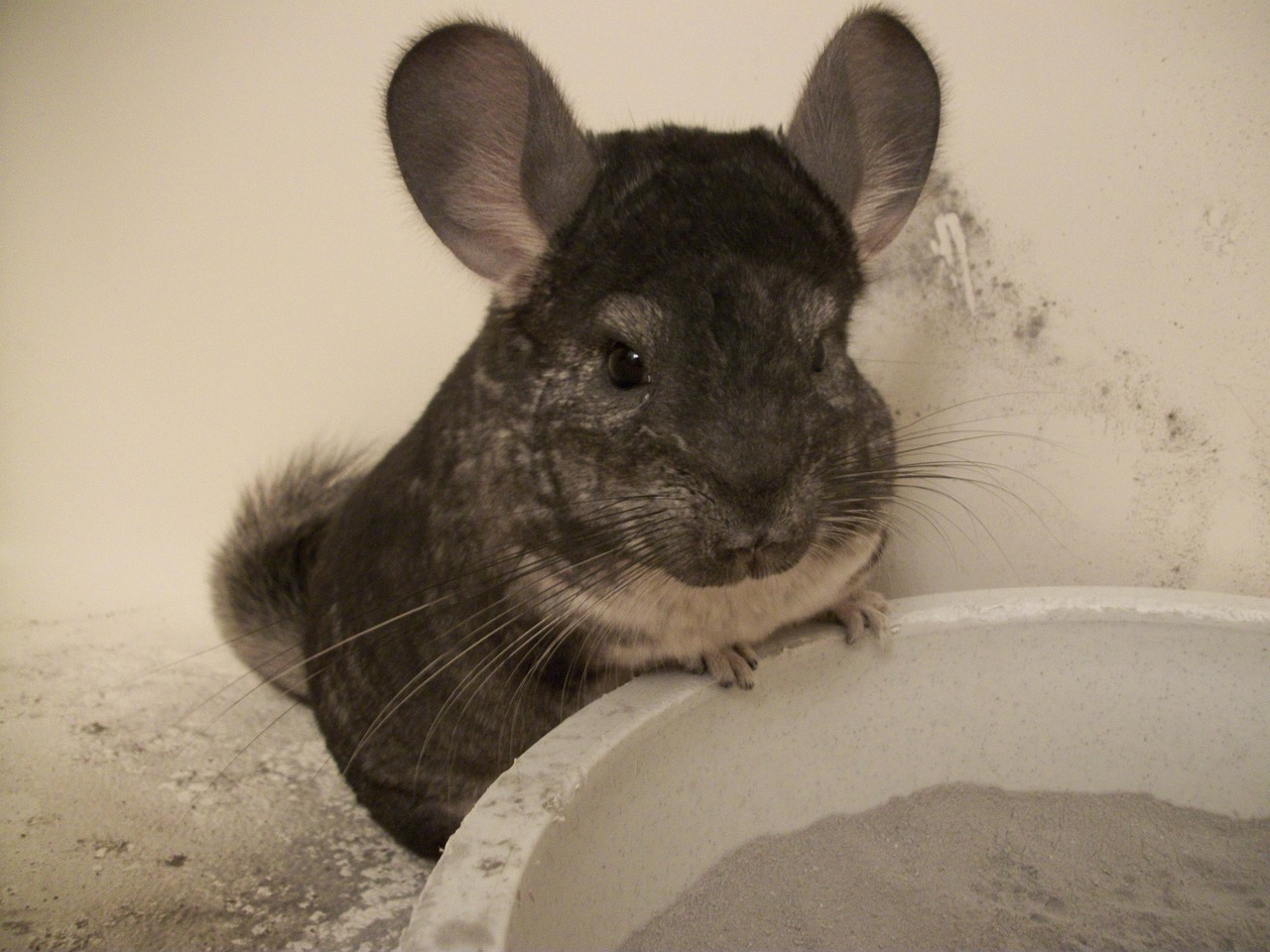
If you’ve never watched a chinchilla take a dust bath, you’re in for a show.
Your chinchilla may dive in, roll wildly, shake themselves off, and climb back in for more. And yes, some dust will end up outside the bath.
Then comes the surprise: out of that dusty little tornado pops a freshly fluffed chinchilla, with a coat that looks clean and somehow feels even softer than before.
Dust bathing is fun to watch, but it’s also an important part of normal chinchilla grooming and gives them a chance to perform a natural behavior. Fortunately, you don’t need an elaborate setup.
The quick answer
If you just want to know what to do:
- Use a commercial bathing dust made specifically for chinchillas. See our recommended dust.
- Put 1 inch of dust in a stable container with enough room for your chinchilla to roll in.
- Offer the dust bath for up to 15 minutes, then remove it to prevent over-bathing and to keep it clean.
- Replace the dust immediately if it becomes damp, soiled with urine or droppings, or mixed with debris.
- Two to three sessions per week is a reasonable starting point for many healthy chinchillas.
Start with the right dust
Buy a bathing product specifically made for chinchillas. Purpose-made dust uses fine, absorbent minerals such as pumice, volcanic ash, or aluminum silicate to help remove oil and moisture from a chinchilla's dense coat. Ordinary sand can be too abrasive, while unrelated household powders are not substitutes for a product formulated for chinchilla grooming.
Don’t improvise with:
- beach sand
- playground sand
- construction sand
- baby powder
- other household material that looks “dusty enough”
What if the package calls it “sand”?
Some chinchilla products use dust and sand somewhat interchangeably.
For example, Exotic Nutrition describes its NativeCritter Chinchilla Dust as a pumice-based bath sand.
Our recommended dust
Recommended dust
Lixit Blue Beauty Chinchilla Dust
- Why consider it
- It is made specifically for chinchilla bathing, and Lixit says it contains no added chemicals or free silica.
- Consider if
- You want a simple dust made specifically for chinchillas.
- Keep in mind
- Pet Food Express lists the material as aluminum silicate powder, but Lixit does not publish that detail on its own product page.
Pick a bath with room to roll
Your chinchilla needs room to throw themselves onto their side and roll. Choose a container that is:
- roomy enough for a full-body roll
- stable enough that it won’t tip easily
- deep enough to keep at least some of the dust inside
- easy to empty and clean
A container around 6 × 6 × 9 inches is a good starting point. Chinchillas vary in size, so the best test is whether yours can enter without squeezing, complete a full roll without hitting the walls, and get out easily. If not, choose a larger container.
Add about 1 inch of dust. That gives a typical chinchilla enough material to roll in without using more than they need.
Open or enclosed?
An open container is easy to enter but allows more dust to escape. A partially enclosed bath helps contain the dust cloud while still letting your chinchilla enter and leave freely. Either design can work if it is stable and roomy enough for a full-body roll.
Enclosed bath option
Kaytee Chinchilla Bath House
- Why consider it
- It is made specifically for chinchillas. Its enclosed sides help contain dust, while the open entrance lets a chinchilla come and go during a supervised session.
- Consider if
- You want to contain more of the dust cloud and can supervise the entire session.
- Keep in mind
- Because it is plastic, it is not appropriate for a chinchilla that chews it; supervise every session and remove the bath immediately afterward. The entrance may also feel tight for a larger chinchilla, so make sure yours can enter, roll, and leave without squeezing.
How often should your chinchilla take a dust bath?
There is no universally agreed-upon schedule that suits every chinchilla. For many healthy chinchillas, two to three sessions per week is a reasonable starting point. Each session can last up to 15 minutes.
Adjust the routine based on what you see
- The coat looks oily, clumped, or tufty. Check the room’s temperature and humidity and make sure the cage does not trap stale air. If conditions are appropriate, consider offering baths more often.
- The skin looks dry or flaky, or the eyes become watery or irritated. Shorten the sessions or offer baths less often.
- You notice coughing, wheezing, or persistent irritation. Stop adjusting the routine yourself and contact an experienced exotic veterinarian.
If the coat stays in poor condition after you adjust the routine—or you notice hair loss, redness, sores, or persistent itching—contact an experienced exotic veterinarian.
Putting it all together: a simple dust-bath routine
Don’t be surprised if your chinchilla gets excited when they see the dust bath—they may be ready to roll before you’ve even set it down!
Add the dust. Put roughly an inch of chinchilla bathing dust into a clean, dry container.
Choose a stable, supervised area. Offer the bath in your chinchilla’s cage or another safe area where they can enter easily, roll without tipping the container, and make a manageable mess. If you offer it inside the cage, keep it away from wheels with exposed bearings. Dust buildup around exposed moving parts may affect how freely a wheel turns.
Let your chinchilla take over. You usually don’t need to teach anything. Let them enter and roll on their own. Your chinchilla may climb into and out of the bath several times during one session. Let them choose whether to continue rather than placing or rolling them by hand.
Keep it a short session. Offer the bath for up to 15 minutes. You don’t need to stand over it with a stopwatch; the important point is that this should be a limited activity, not unrestricted access all day.
Remove the bath and check the dust. Take the bath away after the session to prevent unrestricted access and keep the dust cleaner. Reuse the dust only while it remains dry, loose, and clean. Discard it if it is wet or clumped, or if it contains urine, droppings, food, bedding, or other debris. Store reusable dust somewhere clean and dry. Wash the container if you find contamination or stuck-on residue, then let it dry completely before refilling it.
What if your chinchilla won’t use the bath?
A new or cautious chinchilla may need time. Start with what you see:
- They won’t enter. Check that the opening is easy to access, the container is stable, and the area is calm.
- They enter but can’t roll comfortably. Use a larger container.
- They investigate but don’t bathe. Confirm that you are using chinchilla bathing dust, then give them time and space without forcing them.
- They urinate in the bath. Remove it, discard the dust, and clean and dry the container before the next session.
Don’t put your chinchilla in the container and physically roll them. Let them enter and investigate on their own.
What if they used to bathe normally but stop?
Consider whether anything about the bath, dust, or location changed. A change in your chinchilla’s usual behavior matters more when it becomes a pattern or comes with other changes such as:
- eating less
- fewer or smaller droppings
- unusual hiding
- low activity
- changes in posture
- other behavior that seems off
Those signs suggest the issue may be broader. Contact an experienced exotic veterinarian promptly—especially if your chinchilla is eating less or producing fewer or smaller droppings.
Should you use a water bath?
References
- Merck Veterinary Manual: Chinchillas
- VCA Animal Hospitals: Chinchillas—Housing
- LafeberVet: Basic Information Sheet—Chinchilla
- PetMD: Chinchilla Dust Baths—What They Are and How To Give Your Chinchilla One
- Vanderlip, Sharon L., DVM. The Chinchilla Handbook, 2nd ed., Sourcebooks, 2016, p. 48.
- Pandamonium Pets manufacturer documentation: Basic Spinner—Chinchilla Wheel
- Kaytee manufacturer product page: Chinchilla Bath House
- Lixit manufacturer product page: Blue Beauty Chinchilla Dust
- Pet Food Express retailer product page: Lixit Blue Beauty Bath Dust
- Exotic Nutrition manufacturer product page: NativeCritter Chinchilla Dust