
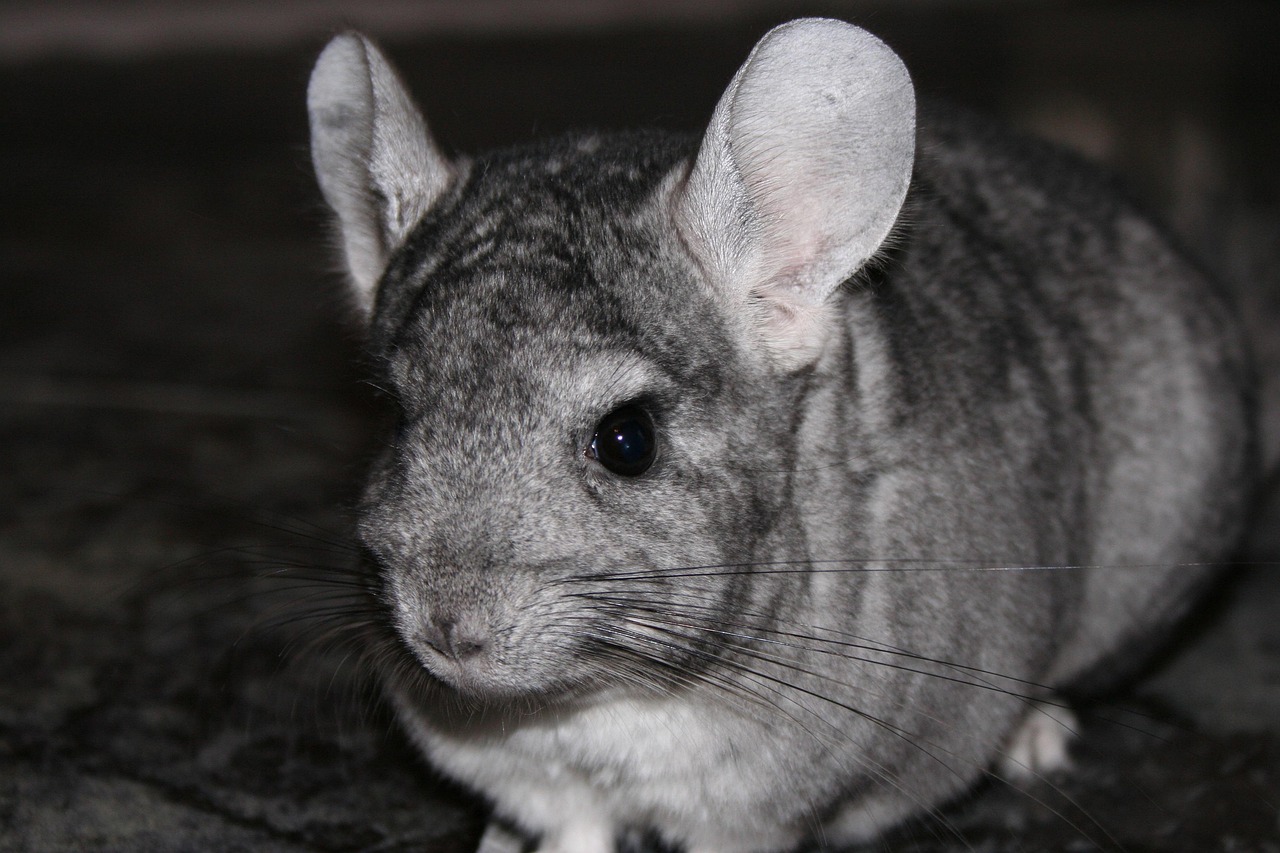
What should a chinchilla eat each day?
Once you have a chinchilla, you may find yourself thinking about hay more than you ever expected! That’s because hay is the foundation of a healthy adult chinchilla’s daily diet:
- Grass hay: keep it available day and night. It should make up most of what your chinchilla eats.
- Plain chinchilla pellets: offer 1–2 tablespoons per chinchilla per day alongside the hay.
- Fresh water: keep it available at all times and replace it daily.
- Treats: these are optional. A healthy diet does not require them.
Young, pregnant, or nursing chinchillas—and those with a health or weight concern—may need changes to their hay or pellets. Ask an experienced exotic veterinarian for an individual feeding plan.
Make hay the food that never runs out
Choose a grass hay such as Timothy or orchard grass, and offer fresh hay every day. Its fiber supports digestion, and chewing the long strands helps wear your chinchilla’s continuously growing teeth. A bowl of pellets cannot do the same job. Keep the hay within easy reach and replace any that becomes wet or soiled.
If you’re choosing your first bag or trying a different texture, our guide to choosing chinchilla hay explains grass types, Timothy cuttings, freshness checks, and buying options.
Measure pellets instead of topping up the bowl
Use a plain, hay-based pellet food formulated for chinchillas without seeds, nuts, or dried fruit.
Measure the daily portion before serving, then check the leftovers before the next feeding. This makes a change in appetite easier to notice than repeatedly filling a bowl. An experienced exotic veterinarian can help you decide whether your chinchilla needs a different portion.
Our chinchilla pellet guide walks through food labels, a recommended pellet for healthy adults, storage, and a gradual switch.
Check that fresh water is easy to drink
A sipper bottle is usually the most practical option because it is less likely to spill or collect bedding and food. A heavy, stable bowl can be used if your chinchilla does not drink from a bottle or has a dental problem that makes the spout uncomfortable, but keep the surrounding bedding dry.
Check the water supply morning and evening. Replace the water daily, and sooner if it becomes dirty. For a bottle, test the spout to make sure water flows; a bottle that remains unusually full may be blocked.
Wash the bottle or bowl daily with soap and water and rinse it well. If drinking becomes difficult or your chinchilla’s usual water intake changes, contact your veterinarian.
Start with the daily diet, then consider treats
You don’t need to buy treats to feed your chinchilla well. If you want something to hand-feed, choose it separately from the daily pellet food so you can control what and how much you offer.
Selected fresh greens can fit into a healthy adult’s diet when introduced slowly; fruit is an occasional extra. Before adding either, use our guide to chinchilla treats and fresh foods for specific choices, portions, and foods to leave out.
Fit feeding into two daily check-ins
A morning and evening check gives you a chance to refresh supplies and notice what has changed. These are care check-ins, not the only times your chinchilla can eat.
- In the morning: check the droppings and note how much food remains from overnight. Discard leftover pellets and replace yesterday’s hay with fresh hay. Clean and refill the water container, then wash and dry the food bowl before adding the next pellet portion.
- In the evening: check hay and water again. Chinchillas often eat much of their food after dark, so leave hay accessible overnight.
- With more than one chinchilla: watch each one eat. Shared leftovers cannot tell you how much each chinchilla ate.
Chinchillas don’t let useful nutrients go to waste. Along with the dry droppings you see, they produce softer cecal pellets and eat them directly to get more nutrition from their food. This is a normal part of their digestion!
Change foods gradually
When changing hay or pellets, keep some of the familiar food available and introduce the new food gradually, one change at a time. Follow any product transition directions or your veterinarian’s plan. Don’t keep increasing a new food if eating or droppings change.
Know when a feeding problem needs a vet
Contact an experienced exotic veterinarian promptly if your chinchilla eats less than usual, produces fewer or smaller droppings, drools, or is less active than usual when normally awake. A chinchilla that still accepts a favorite treat may still have an appetite problem.
References
- Rothacher M, Hatt J-M, Clauss M. A Comparison of Commercially Available Feeds for Rabbits, Guinea Pigs, Chinchillas and Degus with Evidence of Their Diet and Feeding Behaviour in Natural Habitats. Schweizer Archiv für Tierheilkunde. 2023;165(11):726–736.
- Holtenius K, Björnhag G. The Colonic Separation Mechanism in the Guinea-pig (Cavia porcellus) and the Chinchilla (Chinchilla laniger). Comparative Biochemistry and Physiology Part A: Physiology. 1985;82(3):537–542.
- Merck Veterinary Manual. Diet for a Chinchilla.
- Merck Veterinary Manual. Chinchillas.
- Association of Exotic Mammal Veterinarians. How to Care for Your Chinchilla.
- VCA Animal Hospitals. Chinchillas—Feeding.
- LafeberVet. Chinchilla Nutrition: What to Feed Your Chinchilla.
- NC State Veterinary Hospital. Caring for Your Pet Chinchilla.
- RSPCA. A Healthy Diet for Chinchillas.